Social media is growing like never before but we have never had this substantial lack of real social interactions. Glued to our screens as our parents would say. We live in the age of digitization and our world is shaping around this phenomenon. There are many positive aspects that come with it but also a handful of flaws. It’s has gotten to the point were even residential and commercial developers are finding solutions to bring back the old times were communities shared more social interactions.
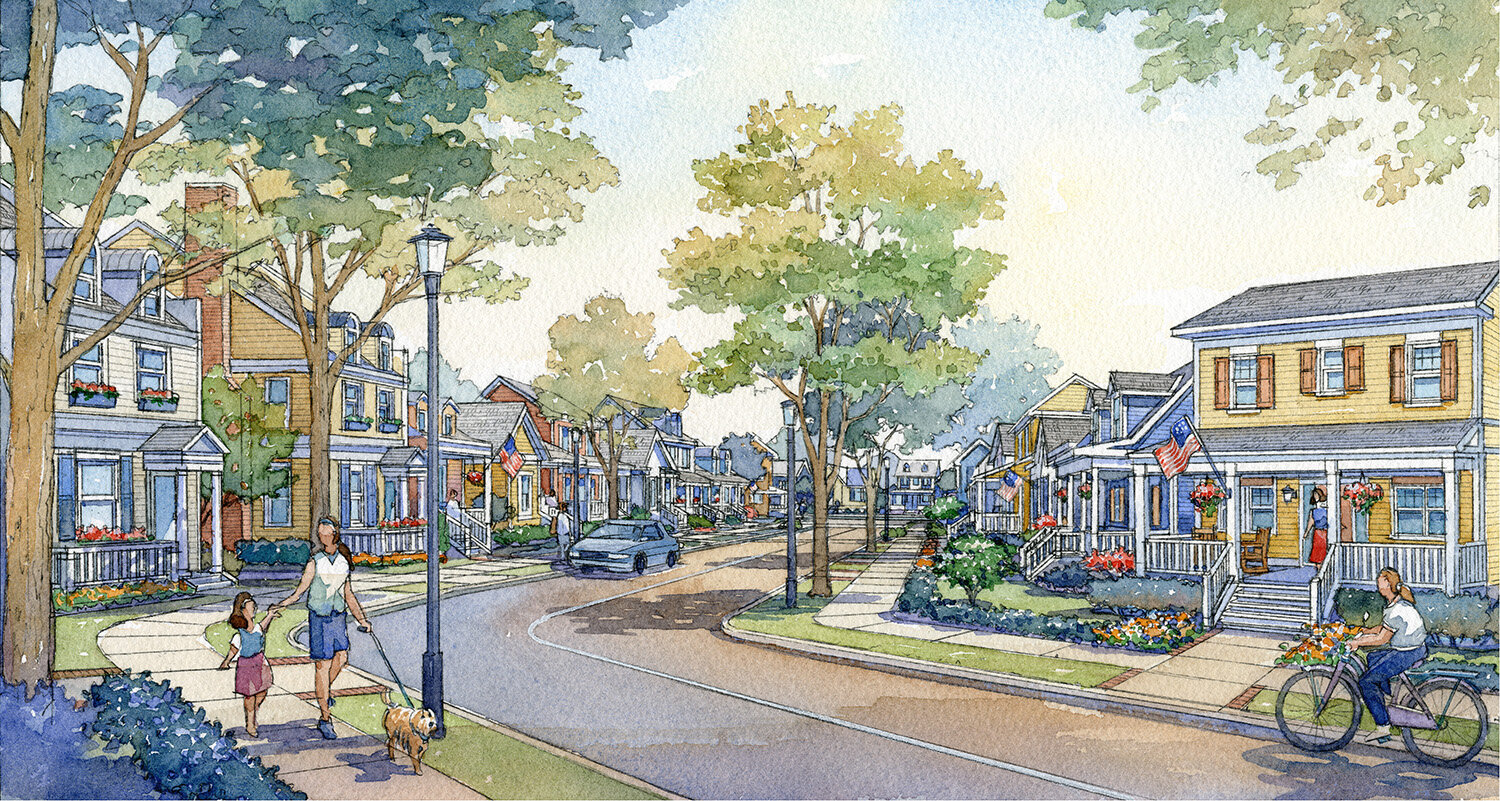
Traditional neighborhood developments employ a mixed-use development style that is digging its way out of the grave and becoming more popular throughout the United States. These neighborhoods are designed to bring back the walkable, mixed-use neighborhoods characteristic of pre-1950s America. Developments like these are known for the sense of community, pedestrian-friendly streets, and a mix of housing types and commercial spaces. Often incorporating features like front porches, interconnected street grids, and public spaces like town squares. Basically the perfect towns we see in all those Hallmark movies.
What are the pros of neighborhoods like these?

Enhanced community feel
You won’t have a 5 acre lot, but you have more than enough neighbors that you get together with. Helping each other with various household projects, hosting cookouts together, or just having a neighbor next door to talk to. These social interactions are priceless and very important for our well-being.
Timeless and functional design that makes sense
We are talking brick and colonial structures in the northeast, while seeing more of a plantation style in the south. While also offering various designs to accommodate people in different stages of life. Old school neighborhoods are far from cookie-cutter divisions where you have more or less the same floorplan throughout the neighborhood. These cookie-cutter neighborhoods target a significantly smaller number of homebuyers and homeowners. Old school neighborhoods are the opposite. They offer a variety of home styles including one and two story homes, townhouses, and apartments. With the big selection, almost anyone can find a suitable home for their lifestyle and needs.

Economic benefits
There are multiple factors that come into play in terms of economic benefits traditional neighborhoods create.
- More money is spent within the neighborhood, boosting local jobs.
- Steady increase in house value. These homes are becoming more and more desirable, so it could be a very solid real estate investment.
- You might find yourself keeping more money in your wallet. More walking, less driving equals lower gas expenses.
- Overall having a smaller home will create additional savings in all different areas such as house maintenance, lower AC and heating bills, and many other sneaky ways you can keep more dollars in your pocket.

Community safety and well being
There are more than a handful of of positives to talk about when it comes to community safety and well being.
- Narrower streets make drivers reduce their speed. The streets are commonly not as wide, sometimes one-way streets and the neighborhood include alley roads to limit the traffic, speed and reducing the overall noise.
- Trees and landscaping creates shaded areas for kids to play outside and prevents pets having to walk on too much hot pavement especially during the summer months.
- Health benefits in terms of using alternative ways to get from point A to B. Adding more walking to our daily routine not only improves our mood, productivity, and health, it improves our lives quite literally on all bases.
If you value any of the above aspects of traditional neighborhood developments, consider adding them to your checklist for the next perfect house purchase!
Leave a Reply